12th International Conference on Peace and Nonviolent Action
Aims and Objectives
- To promote a global understanding of nonviolence as a powerful philosophy and practical method for achieving lasting peace
- To create an international platform for scholars, activists, policymakers, and community leaders to exchange insights on nonviolent approaches to conflict resolution
- To encourage collaborative action toward building cultures of peace at local, national, and global levels.
Theme
Nonviolence (Ahimsa) : A Global Imperative of Sustainable Peace
Every right-thinking person in the world is deeply concerned about the rising trends of violence and hatred in all parts of the world. What worries us most is that many children and youths are being systematically indoctrinated to commit heinous crimes in the name of religion. Not a day passes when we do not hear of the incidents of the rape of minor girls, murders of women, children and senior citizens. Incidents of verbal and emotional violence are widespread in schools, colleges, and families. Moral and spiritual values are at their lowest ebb. The prospects for peace at the global level also appear quite bleak. Racial, ethnic and caste conflicts in different parts of the world are continuing unabated. The big nations are vying with one another to produce more atom bombs and weapons of mass destruction for hegemony and bullying. The UN which prevented wars and conflicts in the post world war II era has been weakened by big veto wielding nations. The threat of war is looming large even now when most people of the world are struggling to make both ends meet.
In such dismal scenario of decadence at all levels only a culture of ahimsa, love and tolerance can save humankind from extinction. Ahimsa does not mean mere abstinence from physical violence but it also means refraining from violence in thought and word. The seeds of violence or nonviolence first sprout in our mind so efforts should be made to nip the evil in the bud during childhood itself. We have to find out how educators can resist this trend towards nihilism, cynicism and dictatorship. We affirm that nonviolence remains a key tool for universal peace and sustainable global civilization in which all can live in peace and non-harm with all others. It is possible only through both individual and collective efforts. As humanity transfers its unique capacity for intelligence into autonomous systems, a new moral frontier has emerged. In a world torn apart by strife, escalating wars, structural inequalities, and environmental collapse, Artificial Intelligence (AI) stands at a crossroads: it will either deepen our divisions or provide the tools to heal them.
The 12th ICPNA is more than a conference; it is a global inquiry into whether the ancient value of Ahimsa (Nonviolence) can guide the design of our future. We seek to evolve a roadmap for a civilization where both human and machine intelligence are consciously aligned with ethical restraint, compassion, and reverence for all forms of life.
Call for Papers
We invite proposals to speak on the sub-themes given below. There will be nine Plenary Sessions in all. The duration of each Plenary Session will be 1 hour and 45 minutes. There will be five speakers excluding the chairperson for each session. Only fifteen minutes will be given to each speaker; however, the written paper for publication may be longer. Thirty minutes are reserved for discussions.
To express your interest in presenting a paper at ICPNA, kindly register yourself through the Registration Form and send your details to icpna@anuvibha.org
Plenary Sessions & their Sub-Themes
(Tentative Schedule)
Suggested Topics for Workshops
- The Seville Statement on Violence and Machine Learning: Connecting the rejection of biological determinism to how AI "learns" peaceful or violent patterns.
- Digital Governance & Human Rights: Ethics, data justice, and democratic accountability in an AI-dominated society.
- Social Cohesion: Opposing gender, family, and racial violence in the age of screens and digital amplification.
- Preksha Meditation and Jivan Vigyan as Instruments for Attitudinal Changes in individuals.
- Artificial Intelligence and its inherent perils: What measures do you suggest to escape these perils?
Guidelines for Plenary Presenters
Those who want to make plenary presentations are advised to read the sub-theme of a particular session carefully and stick to its spirit. The papers of those who write irrelevantly and whose papers contain significant language errors will not be considered for presentation. If the content is good, please get it edited by an English language teacher or professor.
For a presentation at any of the above Plenary Sessions please use the suggested format and email it to icpna@anuvibha.org giving the following details:
- Title of the paper or presentation
- Name of the plenary session for which it is meant
- Summary of your paper in 150 - 200 words. Please use separate sheet for it. The programme committee will inform you of its decision in the first week of October 2026.
Workshops
In addition to the above Plenary Sessions there will be nine parallel workshops in all but organizing more or fewer workshops may be considered if the need arises. The organizers will have the liberty to club together three or four proposals for a workshop. We request you to specify the topic of your workshop clearly. Each workshop will be of one and a half hours duration. The workshop will be led by the proposer and they will be free to choose other speakers – not more than three. Each speaker will get fifteen minutes only. Thirty minutes are reserved for interactive discussions.
To submit proposals for a workshop just write the title and a summary of what you would like to discuss in two hundred words. It should be emailed to icpna@anuvibha.org
A Round-table for Youths
Topic – The Role of Youths in Building a Peaceful Society
There will be one Round-Table for youths on the above topic. Youths from all over the world are invited to participate in this Round-Table. Any youth who wishes to participate in it should email to icpna@anuvibha.org their views about the topic in 100 words. The Round-Table Convener will choose nine best participants on the basis of their write-ups. The youths must register in large numbers. They can sit as observers, listen to speakers and participate in discussions at the round-table or any other session they would like to attend. The Round-Table will be of one and a half hours duration. Each youth participant will get seven minutes. The last date for the proposal will be 30 September 2026.
For Registration
Every participant, whether they are a presenter or a non-presenter, will be required to register themselves before 30 September 2026 in the prescribed format given at the end of this brochure. There is no registration fee.
We warmly invite you to join this international dialogue on peace and nonviolence by completing your registration through the following link: https://anuvibha.org/12th-icpna-registration
The officially confirmed presenters or non-presenters will be provided free local hospitality including accommodation, breakfast, lunch and dinner. They will be accommodated in the guest houses situated in the sprawling JVB Campus furnished with Gandhian Simplicity.
Venue and Related Information
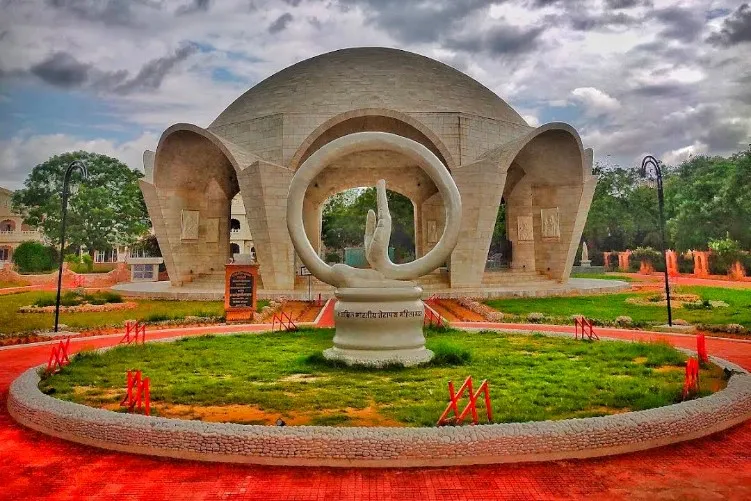
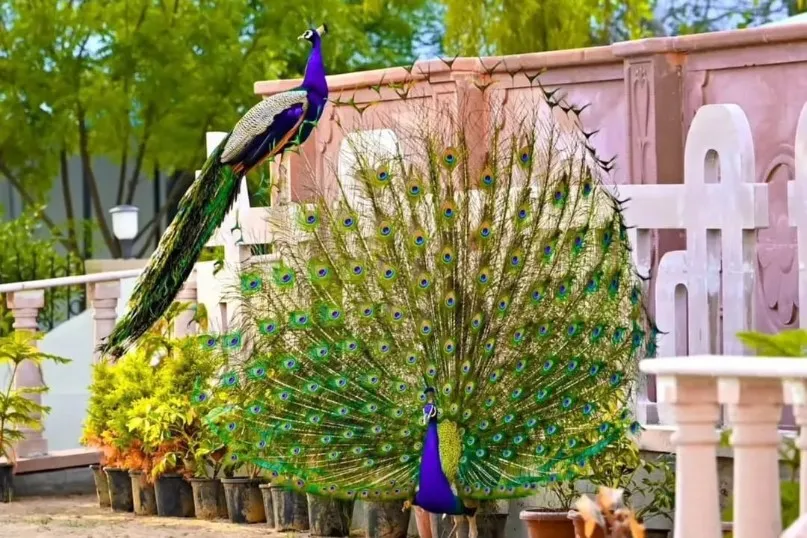
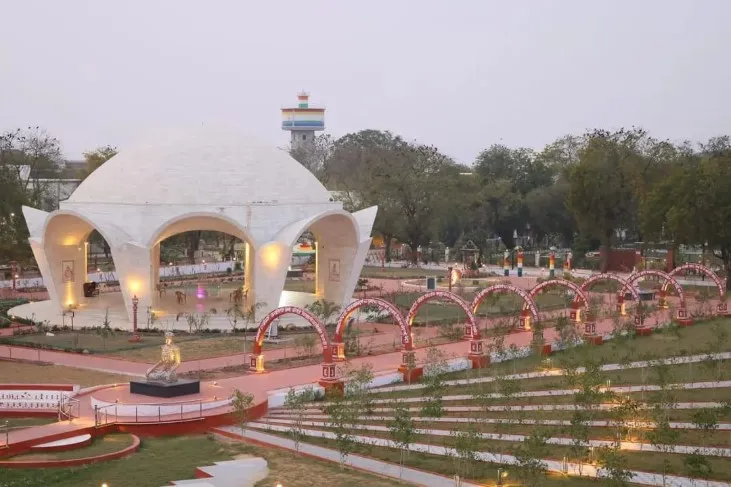
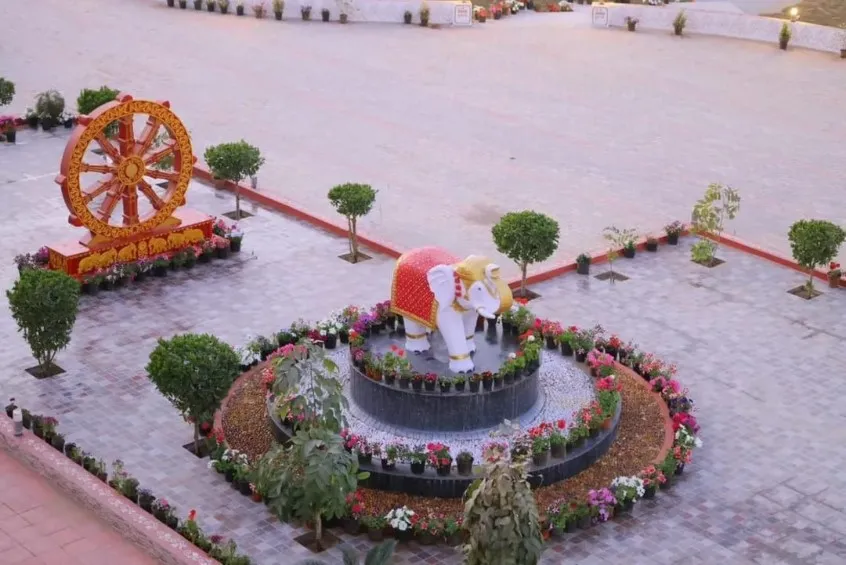
The venue for the 12th ICPNA is Ladnun, Dist. Didwana – Kuchaman (Rajasthan). It is the birth town of Late His Holiness Acharya Tulsi – the ninth Acharya of Jain Svetamber Terapanth. It is also the seat of the Jain University and Jain Vishva Bharati, an organization dedicated to service and traditional studies of Jainism. JVB Campus houses the Jain University, staff quarters, Jain University office, hostel, Amritayan – a residence for samanis (semi-nuns) and also a specific complex used for visiting monks, Acharya Shri or Chaturmas of Acharya Shri or any other monk. The town of Ladnun is also known for some very old Jain temples.
Travel Information for Both Overseas and Domestic Participants
To ensure a smooth journey, overseas participants are advised to arrive in Jaipur by the evening of 3rd or 4th December, 2026.
Step 1: Travel to India
Participants traveling from Europe, North America, South America, South Asia, or other international destinations may arrive at:
- Delhi International Airport
- Mumbai International Airport
From Delhi or Mumbai, several domestic airlines operate regular flights to Jaipur.
Step 2: Inform the International Coordinator
At least one week before your departure to India, please contact the Associate International Coordinator:
Mr. Jai Bohra
Mobile & WhatsApp: +91 98292 16435
Our team will assist you with room booking at ANUVIBHA Kendra, Jaipur.
Step 3: Reach ANUVIBHA Kendra, Jaipur
Participants may travel independently to ANUVIBHA Kendra using:
• Taxi services
• Ola or Uber
Address:
ANUVIBHA Guest Houses
B01–B02, Opposite Gaurav Tower
JLN Marg, Jaipur – 302017, Rajasthan, India
Step 4: Travel to Ladnun
- Participants staying at ANUVIBHA Kendra may travel to Ladnun using transportation arranged by the organizers.
- Special buses are scheduled to depart from ANUVIBHA Kendra on 4th December 2026 at 2:00 PM after lunch.
- Participants are requested to reach ANUVIBHA Kendra before 2:00 PM to board the bus.
Important Note: Participants unable to reach ANUVIBHA Kendra before 2:00 PM on 4th December, 2026 will need to make their own travel arrangements to Ladnun at their own expense.
How to Reach Ladnun
Ladnun is well connected by road and rail and can be reached conveniently from Jaipur, Delhi, and Jodhpur.
By Air
From these airports, participants can continue their journey to Ladnun by road or rail. The nearest major airports are:
• Jaipur International Airport
• Jodhpur Airport
• Delhi International Airport
By Rail
Ladnun Railway Station is connected to major cities in Rajasthan and neighboring states. Participants may travel by train from:
• Delhi
• Jaipur
• Jodhpur
By Road
Ladnun can be reached through:
• Intercity buses
• Private taxis/cabs
• Self-drive vehicles
Alternative Travel Options
Participants may travel directly to Ladnun from:
• Delhi
• Jaipur
• Jodhpur
using train, bus, or taxi services.
Google Map Location
For your convenience, the location of Jain Vishva Bharati, Ladnun, may be accessed through https://maps.app.goo.gl/NLEDCX1DXRdZUX6d8.
Visa Information for International Participants
- All international participants are responsible for obtaining the appropriate visa for travel to India.
- India offers several visa categories, including Tourist Visa and Conference Visa. The appropriate visa category may vary depending on your nationality, purpose of travel, and the prevailing regulations applicable at the time of application.
- Participants are strongly advised to review the official Government of India visa guidelines and apply for the visa category that best suits their travel purpose.
-
Official Visa Resources
- Indian Visa Online (Government of India): https://indianvisaonline.gov.in
- e-Visa Application Portal: https://indianvisaonline.gov.in/evisa
- Visa Categories Information: https://indianvisaonline.gov.in/visa/visa-category.html
Important Recommendations
- Apply for your visa well in advance of your travel dates, preferably at least 4–6 weeks before departure.
- Keep copies of your conference invitation, registration confirmation, accommodation details, and return travel itinerary, as these may be required during the visa application process or upon arrival in India.
- Participants should consult the nearest Indian Embassy, Consulate, or Visa Application Centre if they require guidance regarding the most appropriate visa category for their specific circumstances.
Language
For 12th ICPNA only English language will be the medium of expression.The participants of some countries who do not know English will be allowed to bring their own translators / interpreters but the time taken by the presenter and the translator will not exceed twenty minutes. So they should trim their texts to fit into this time limit.
12th International Conference on Peace and Nonviolent Action (ICPNA) | Ladnun, Rajasthan
Email: icpna@anuvibha.org | Anuvrat Global Organization (Anuvibha)
© 2026 ICPNA Secretariat — Cultivating Nonviolence for a Peaceful World